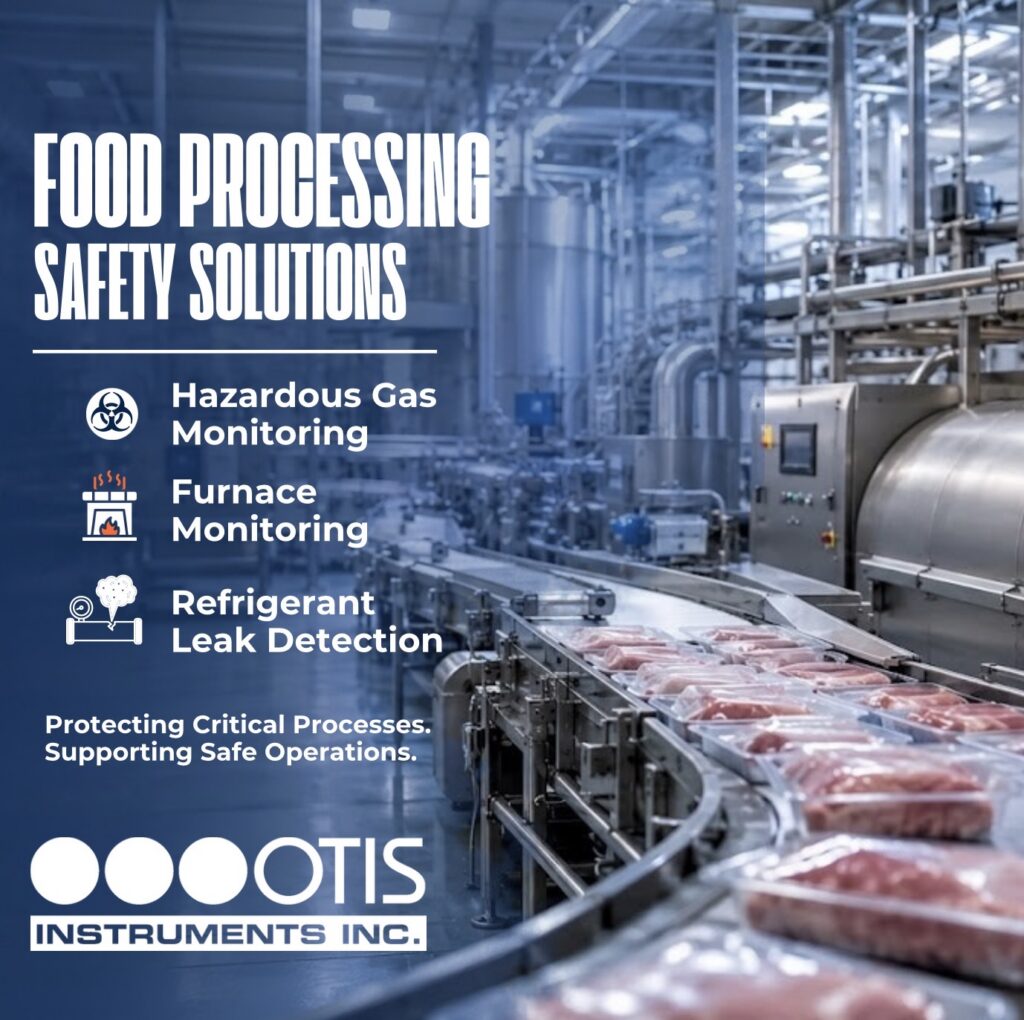

Gas Detection in Food Processing Facilities: Protecting Personnel, Processes, and Productivity
An Industry Spotlight by Otis Instruments, Inc.
Walk through almost any food processing plant and you’ll see how much attention goes into the things you can see: the production lines, the sanitation routines, the equipment that keeps everything moving. But some of the most important safety work happens around something you can’t see at all. Gases move quietly through these facilities every day, and the systems that watch for them rarely get the spotlight.
That’s worth changing. Food processing happens in tightly controlled environments where safety, product quality, and efficiency all have to pull in the same direction. Between refrigeration systems, ovens, wastewater treatment areas, and fuel burning equipment, plants deal with a surprising range of gas related hazards. A solid gas detection strategy is what keeps those hazards from turning into incidents, helping facilities protect their people, cut down on downtime, stay on the right side of regulations, and keep production running.
Why Gas Detection Matters in Food Processing
The equipment and processes that make a food plant productive can also introduce hazardous gases into the workplace. Left unmonitored, those gases put more than just employee safety at risk; they can affect product quality, equipment reliability, and the smooth operation of the facility as a whole.
This is where gas detection earns its keep. Continuous monitoring and early warning give a facility the chance to catch a problem while it’s still small, long before it becomes a serious incident.
And it doesn’t matter what’s coming off the line. Whether you’re processing meat, dairy, baked goods, beverages, frozen foods, or packaged products, keeping eyes on gas concentrations is a core part of any comprehensive safety program.
Common Gas Hazards in Food Processing Facilities
Hazardous Gas Monitoring
A lot of food processing operations generate or run into hazardous gases somewhere along the way, whether during production, waste management, or utility operations.
Hydrogen sulfide is a common one, often showing up in wastewater treatment systems and organic waste handling. Even at low concentrations, it can threaten the health of personnel and create unsafe working conditions.
Methane is another to watch for. It can build up in certain waste treatment applications or confined spaces, and because it’s highly combustible, continuous monitoring is essential for reducing explosion risk and keeping the workplace safe.
Fixed gas detection systems keep watch over these hazards around the clock, so a facility can respond fast the moment gas levels start to look abnormal.
Furnace and Combustion Monitoring
Ovens, dryers, boilers, and furnaces do a lot of the heavy lifting in food production, and all of them produce combustion related gases that need to be monitored to keep operation safe and efficient.
Continuous monitoring can flag trouble early: incomplete combustion, exhaust system problems, or ventilation shortcomings that might otherwise go unnoticed until they affect production or put workers at risk.
Keeping that kind of visibility into combustion processes does double duty. It sharpens operational awareness while also supporting equipment reliability and process efficiency.
Refrigerant Leak Detection
Modern food processing leans heavily on refrigeration to maintain product quality and preserve inventory, and many facilities rely on refrigerants like ammonia or other cooling agents that demand careful monitoring.
A refrigerant leak is rarely a small problem. It can create safety hazards, lead to product loss, disrupt operations, and raise regulatory concerns all at once. Catching a leak early lets maintenance teams jump on it quickly, which limits downtime and helps protect both personnel and product integrity.
This matters most in the places where temperature control is everything: cold storage facilities, freezers, processing rooms, and distribution centers.
Benefits of Gas Detection Systems in Food Manufacturing
A comprehensive gas detection setup pays off across the operation in several ways:
- Enhanced worker safety. Continuous monitoring catches hazardous conditions before they become emergencies, giving personnel the time to take corrective action or evacuate when needed.
- Reduced operational downtime. Spotting a gas leak or equipment issue early means maintenance teams can fix it before it turns into a production interruption or an equipment failure.
- Regulatory compliance support. Many facilities have to meet workplace safety requirements and industry regulations, and gas detection systems help document monitoring efforts and back up those compliance initiatives.
- Improved process reliability. Keeping tabs on combustion processes, refrigeration systems, and hazardous gas concentrations hands operators valuable information that can lift overall facility performance.
- Integration with facility control systems. Modern systems can tie into plant automation and control platforms, bringing monitoring, alarm management, and reporting together in one place.
Selecting the Right Gas Detection Solution
No two food processing facilities are exactly alike, and the right monitoring strategy depends on the specifics: facility size, production processes, environmental conditions, and regulatory requirements all shape what an effective system looks like.
When you’re weighing your options, it helps to think through:
- The target gases you need to detect
- The environmental conditions the system will operate in
- Your alarm notification requirements
- How well it integrates with existing control systems
- Installation flexibility
- Long-term maintenance requirements
Partnering with an experienced gas detection provider is the surest way to get a system designed around your facility’s particular safety and operational goals, rather than a one-size-fits-all setup.
Supporting Safer Food Processing Operations
At the end of the day, food processing depends on safe, reliable operations to stay productive, keep employees protected, and deliver consistent product quality. Gas detection sits right at the center of that, helping identify hazards, support compliance, and let facilities operate with confidence.
From hazardous gas monitoring and combustion oversight to refrigerant leak detection, the right strategy gives you the visibility you need to protect your people, your equipment, and your operations.
Otis Instruments delivers gas detection solutions built for demanding industrial environments, providing reliable monitoring that helps food processing facilities maintain safe operating conditions while supporting long term operational success.