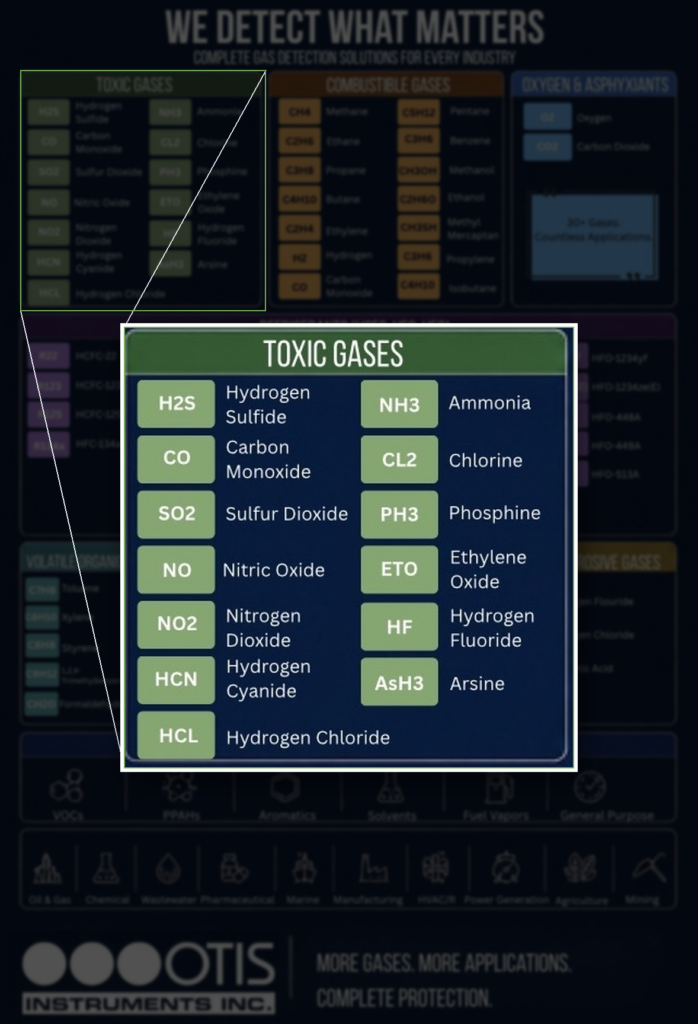
Inside Our Gas Detection Coverage: A Closer Look at Toxic Gases
In our overview of everything Otis Instruments detects, we showed you the full picture. This time, we are zooming in on one of the most important categories of all: toxic gases.
Toxic gases are some of the most dangerous threats in any industrial environment, and not because they are rare. The real problem is that many of them are invisible, and several turn deadly long before you would ever notice them. That combination is what makes reliable detection so critical. Here is a closer look at the toxic gases Otis Instruments detects, and why each one earns a place on the list.
Hydrogen Sulfide (H₂S): The Warning You Cannot Trust
Hydrogen Sulfide (H₂S) is the “rotten egg” gas familiar to anyone working in oil and gas or wastewater. It has a distinctive smell at low levels, but here is the danger: at high concentrations, H₂S quickly deadens your sense of smell. By the time it matters most, you cannot rely on your nose to warn you, which is exactly why continuous monitoring is essential.
Carbon Monoxide (CO) gives you nothing to go on. It is colorless, odorless, and a byproduct of nearly any combustion process, which means it can show up almost anywhere fuel is burned. Without a detector, there is simply no way to know it is there.
Ammonia (NH₃) and Chlorine (Cl₂): Small Amounts, Big Hazards
Ammonia (NH₃) and Chlorine (Cl₂) are common across refrigeration, agriculture, and water treatment. Both are highly irritating and hazardous even in small amounts, so keeping a close watch on NH₃ and Cl₂ levels protects the people working around them.
Sulfur Dioxide (SO₂), Nitric Oxide (NO), and Nitrogen Dioxide (NO₂): Combustion and Refining Byproducts
Sulfur Dioxide (SO₂), Nitric Oxide (NO), and Nitrogen Dioxide (NO₂) tend to show up together as byproducts of combustion and refining. Beyond the direct risk to workers, these gases affect air quality, so monitoring them supports both personnel safety and broader environmental responsibility.
Phosphine (PH₃) and Arsine (AsH₃): Low Limits, High Stakes
Phosphine (PH₃) and Arsine (AsH₃) are critical to monitor in settings like semiconductor manufacturing and fumigation, where exposure limits are extremely low. There is very little margin for error with these two, which puts a premium on accurate, sensitive detection.
Hydrogen Fluoride (HF) and Hydrogen Chloride (HCl): Aggressive and Corrosive
Hydrogen Fluoride (HF) and Hydrogen Chloride (HCl) are aggressive, corrosive gases found in refining, chemical processing, and etching applications. They threaten both the people nearby and the equipment around them, so early detection protects your workforce and your infrastructure at the same time.
Hydrogen Cyanide (HCN) and Ethylene Oxide (ETO): Where Detection Is Non-Negotiable
Hydrogen Cyanide (HCN) and Ethylene Oxide (ETO) turn up in chemical processing and sterilization, environments where reliable detection is simply non-negotiable. The consequences of missing them are too serious to leave to chance.
Why It All Comes Back to Reliable Detection
There is a common thread running through every gas on this list: each one can put your people at risk before there is any obvious warning sign. No smell, no color, no second chance. That is exactly why dependable, accurate detection matters, and why it sits at the center of everything Otis Instruments builds.
This is Part 2 of our closer look at what our gas detection coverage includes. Next in the series, we turn to combustible gases.